+852 6931 0236
[email protected]
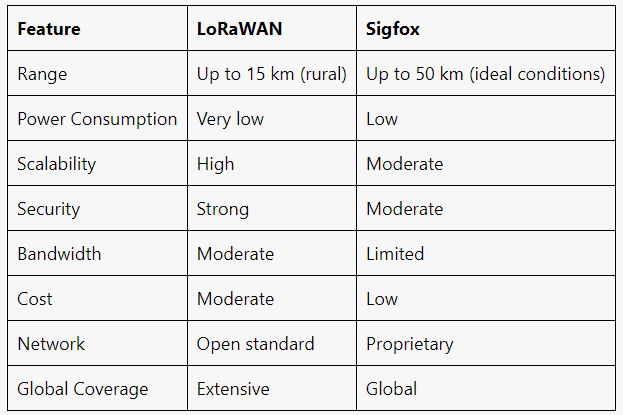
As the Internet of Things (IoT) continues to expand, selecting the right communication technology for your IoT deployment is crucial. Among the leading contenders in the low-power wide-area network (LPWAN) space are LoRaWAN and Sigfox. Both technologies offer unique advantages and are designed for specific use cases. In this blog, we’ll compare LoRaWAN and Sigfox, examining their features, strengths, and potential applications to help you determine which is the best fit for your needs.
LoRaWAN
LoRaWAN (Long Range Wide Area Network) is an open standard managed by the LoRa Alliance. It uses the LoRa modulation technique, which enables long-range communication and low power consumption. LoRaWAN is designed to connect battery-operated devices to the internet wirelessly over long distances.
Sigfox
Sigfox is a proprietary LPWAN technology developed by the French company Sigfox. It focuses on providing ultra-narrowband communication, which allows for low power consumption and extended range. Sigfox operates its own global network and offers connectivity as a service.
1. Network Architecture
2. Frequency Bands
3. Data Rates and Payload Size
4. Power Consumption
5. Coverage and Range
6. Scalability
When to Choose LoRaWAN:
When to Choose Sigfox:
Indoor air quality (IAQ) has a significant impact on health, well-being, and productivity. Poor air quality can lead to various health issues, including respiratory problems, allergies, and even cognitive impairment. With the advent of LoRaWAN (Long Range Wide Area Network) technology, monitoring and managing indoor air quality has become more efficient and accessible. This blog delves into the latest developments in LoRaWAN sensors specifically designed for indoor air quality monitoring.
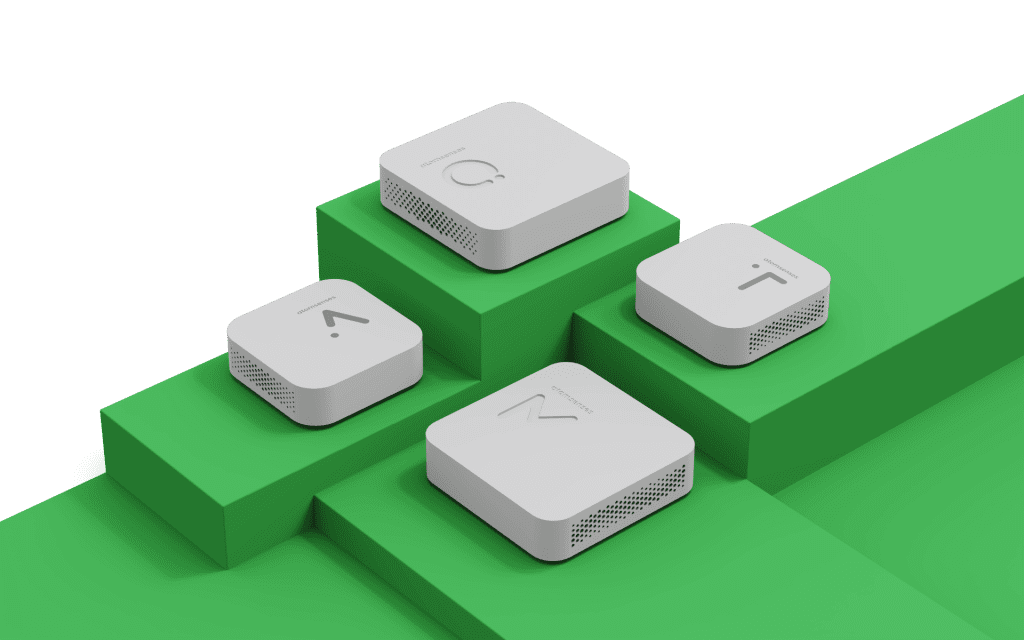
Atomsenses LoRaWAN Indoor Air Quality Sensors
Indoor environments can harbor pollutants such as volatile organic compounds (VOCs), particulate matter (PM), carbon dioxide (CO₂), and humidity levels that can adversely affect health. Effective monitoring and management of these parameters are crucial for maintaining a healthy indoor environment, especially in places like homes, offices, schools, and hospitals.
LoRaWAN technology offers several advantages for IAQ monitoring:
1. Multi-Parameter Sensing
Modern LoRaWAN IAQ sensors are capable of measuring multiple parameters simultaneously, including:
2. Enhanced Accuracy and Precision
Recent advancements have improved the accuracy and precision of IAQ sensors. Enhanced calibration techniques and advanced algorithms ensure that the data collected is reliable and actionable.
3. Real-Time Monitoring and Alerts
LoRaWAN IAQ sensors provide real-time monitoring and can trigger alerts when air quality parameters exceed predefined thresholds. This feature is crucial for timely interventions and maintaining a healthy indoor environment.
4. Integration with Building Management Systems (BMS)
LoRaWAN IAQ sensors can be integrated with existing building management systems, allowing for automated control of HVAC systems based on real-time air quality data. This integration helps optimize energy use while maintaining optimal air quality.
5. Data Analytics and AI Integration
The integration of AI and machine learning with LoRaWAN IAQ sensors enables advanced data analytics. These technologies can identify patterns, predict potential issues, and provide actionable insights for improving indoor air quality.
Homes and Residential Buildings
LoRaWAN IAQ sensors help homeowners monitor the air quality in their living spaces, ensuring a healthy environment for their families. They can detect pollutants from household products and activities, providing insights for better ventilation and air purification.
Offices and Workspaces
In office environments, maintaining good air quality is essential for employee health and productivity. LoRaWAN IAQ sensors can monitor CO₂ levels, VOCs, and particulate matter, ensuring that the workspace remains healthy and conducive to work.
Schools and Educational Institutions
Children are particularly vulnerable to poor air quality. Deploying LoRaWAN IAQ sensors in schools helps ensure a healthy learning environment, reducing absenteeism and improving student performance.
Healthcare Facilities
In hospitals and healthcare facilities, maintaining optimal air quality is critical. LoRaWAN IAQ sensors provide real-time data to help manage and control airborne contaminants, ensuring a safe environment for patients and staff.